SAN DIEGO — “What kind of soil is my heart?”
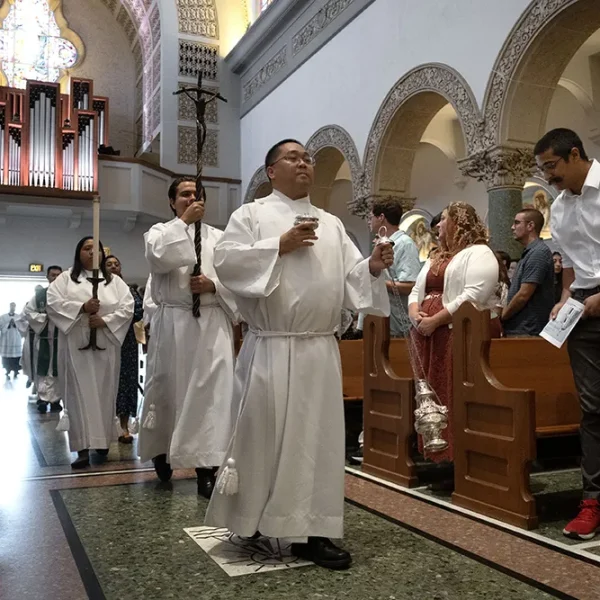
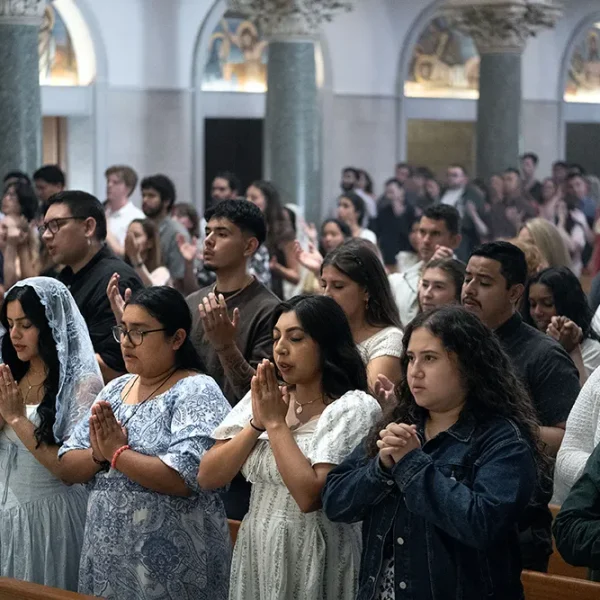
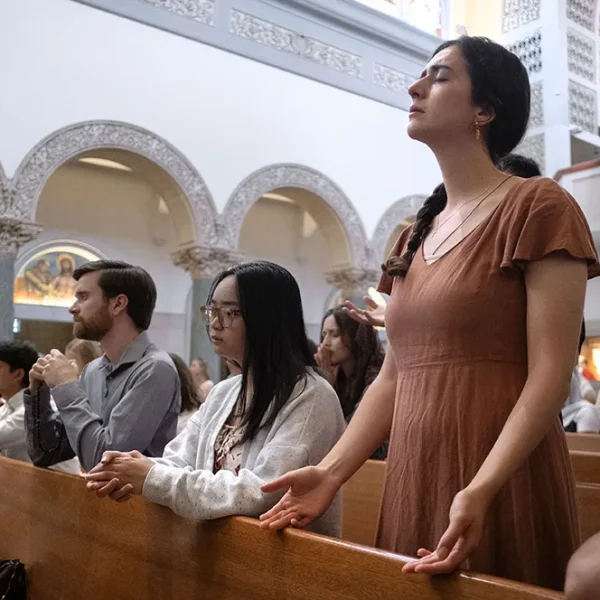
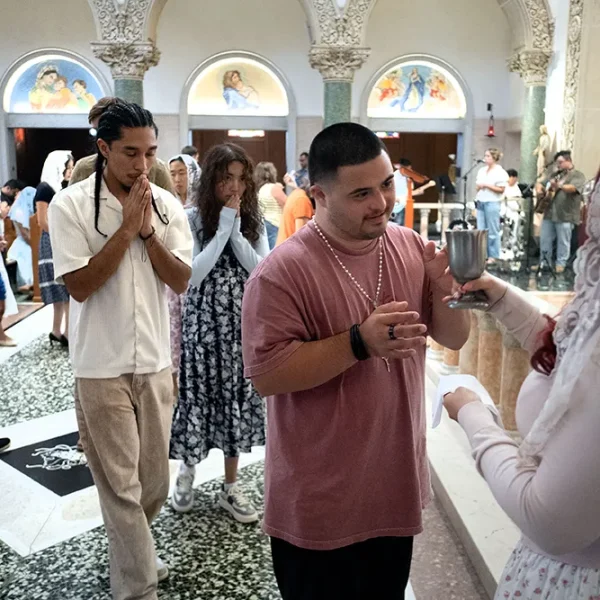
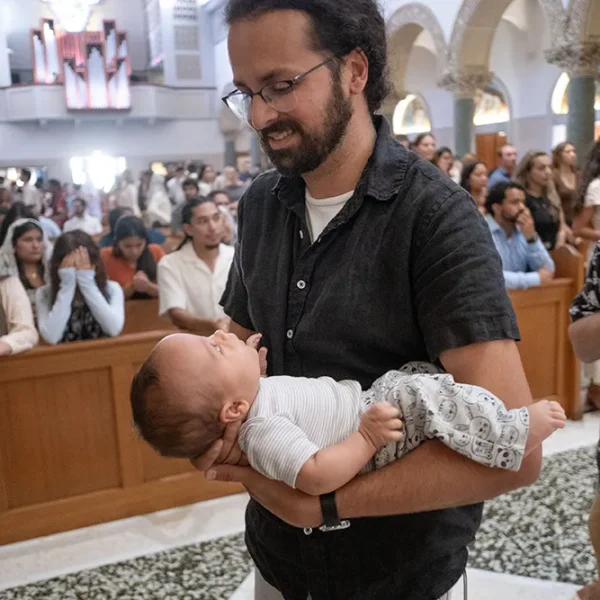
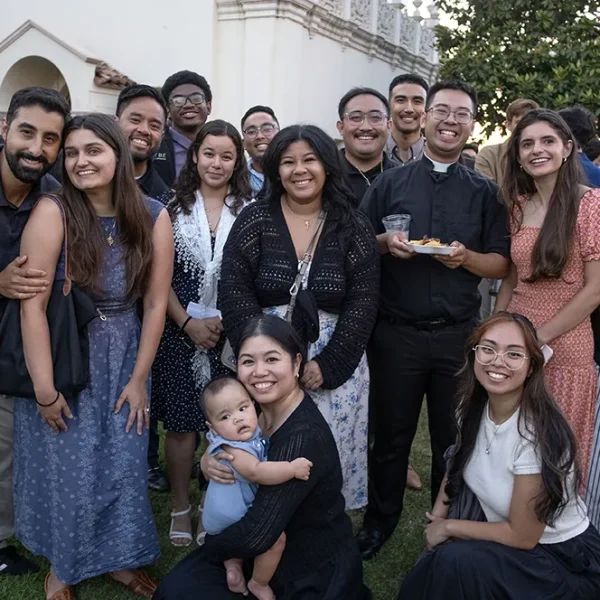
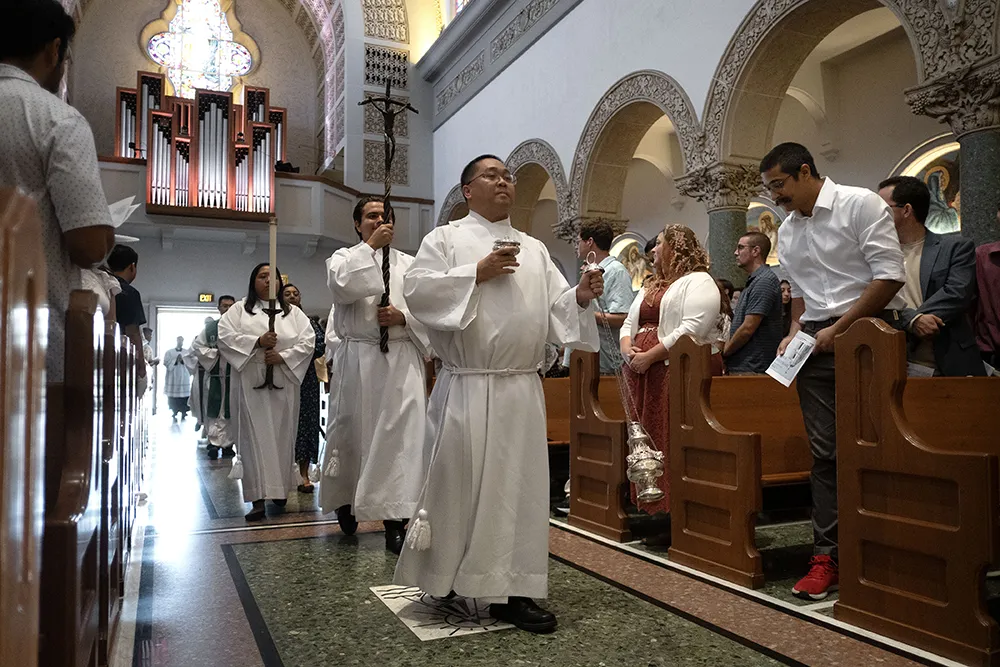
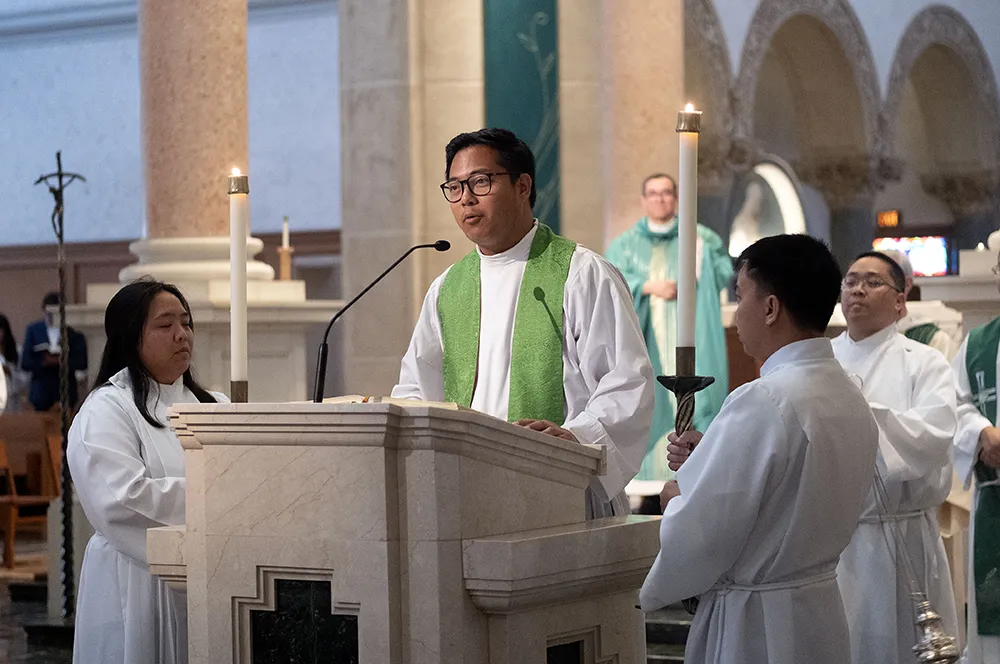
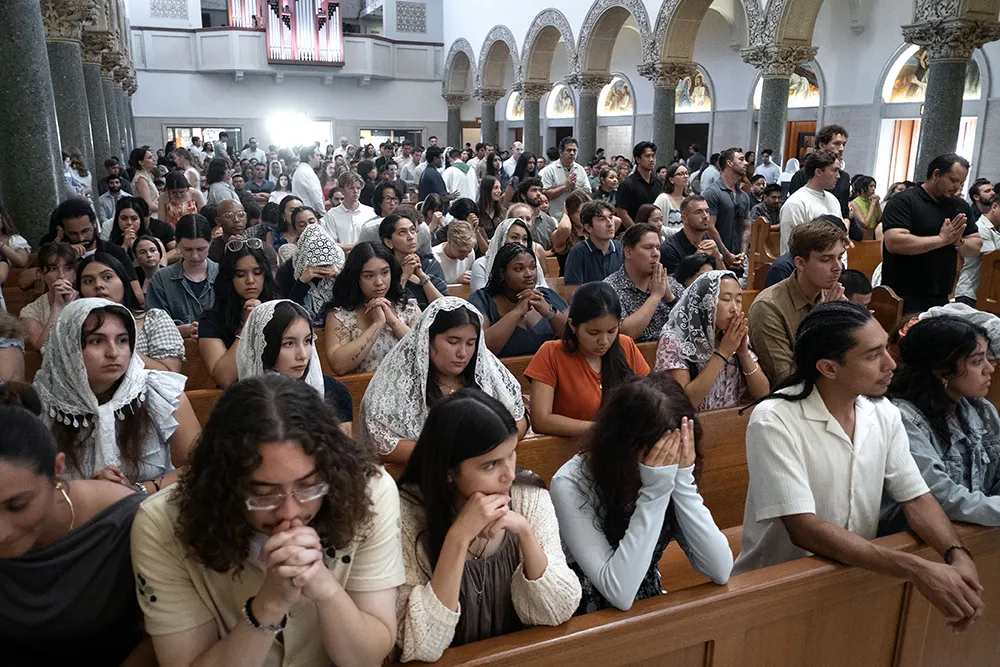
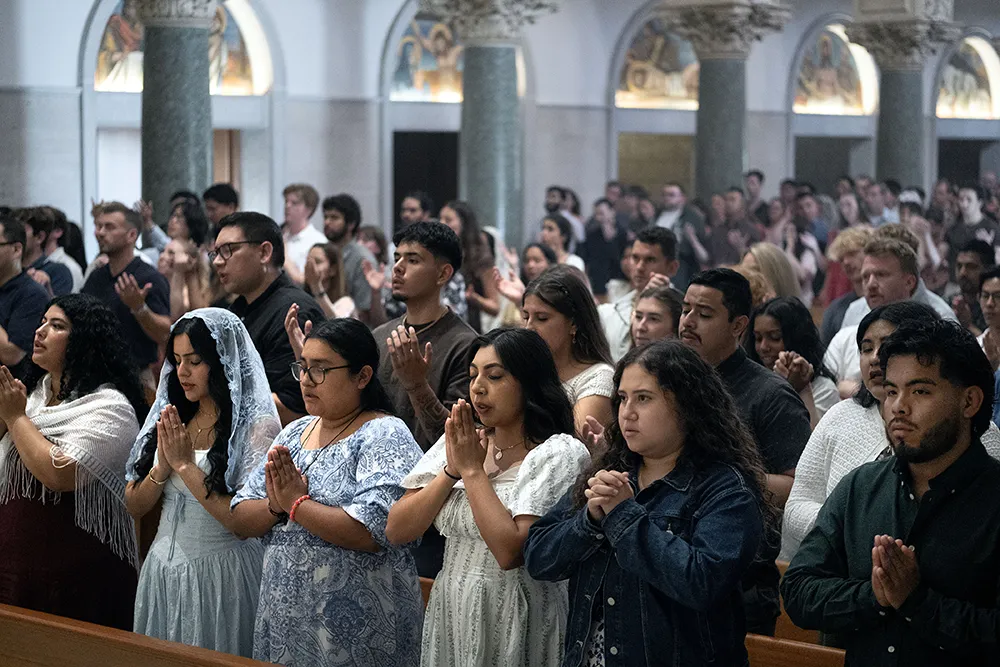
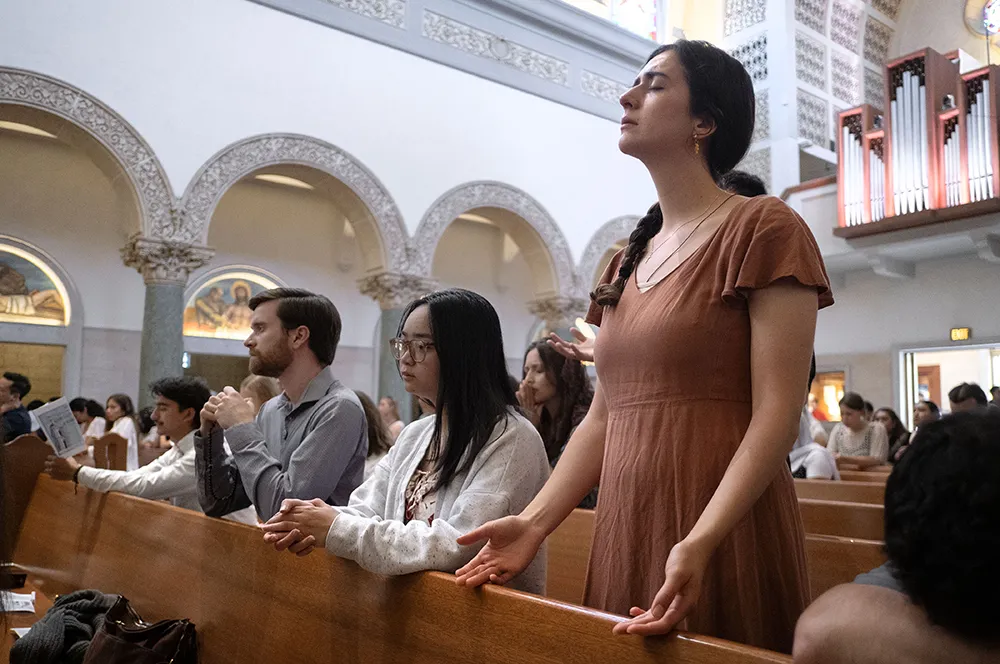
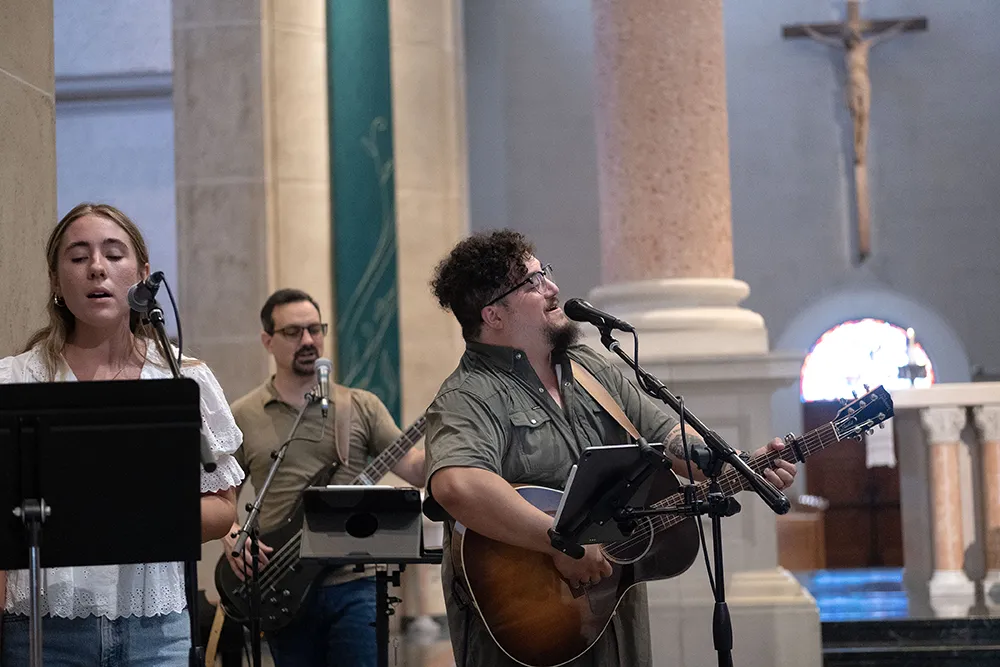
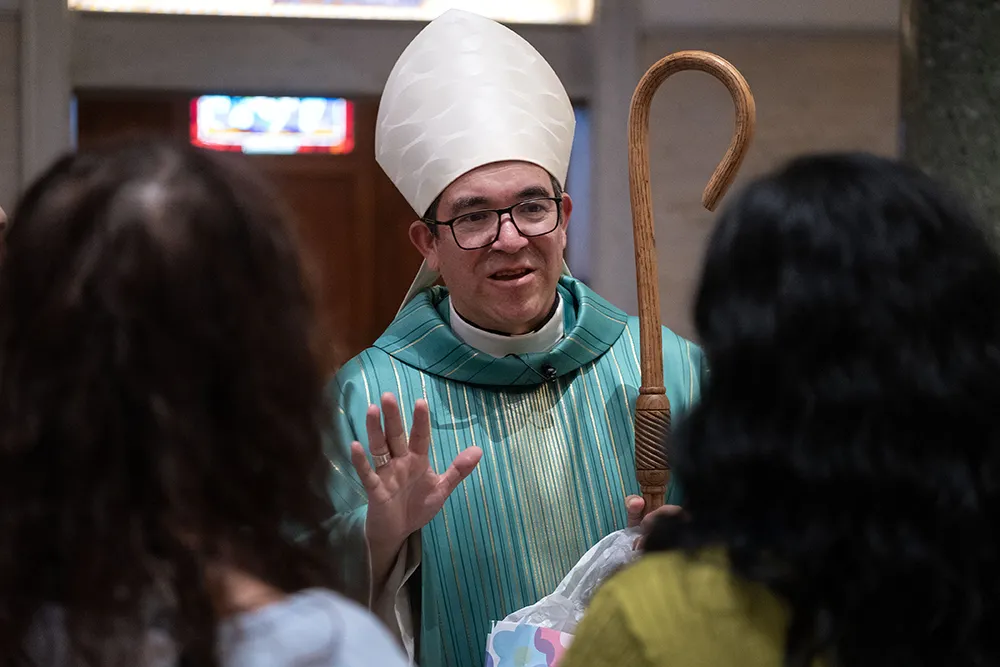
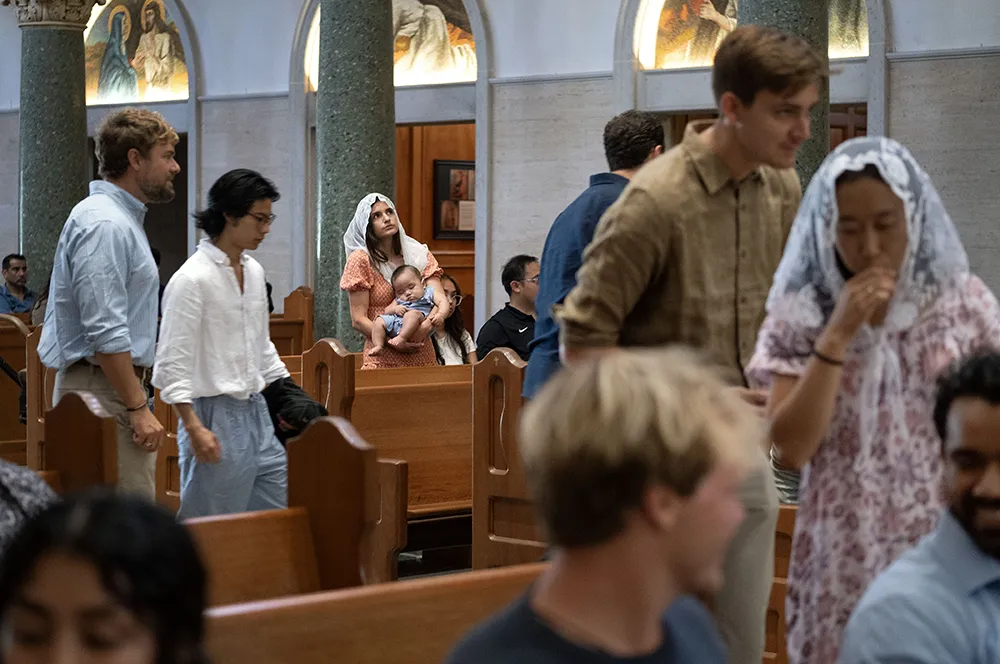
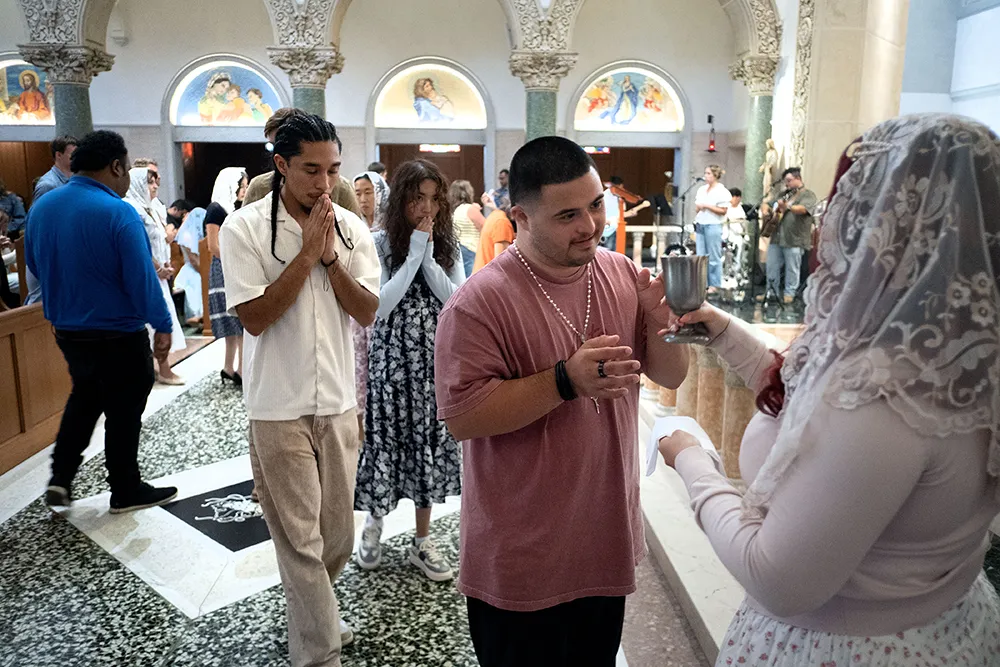
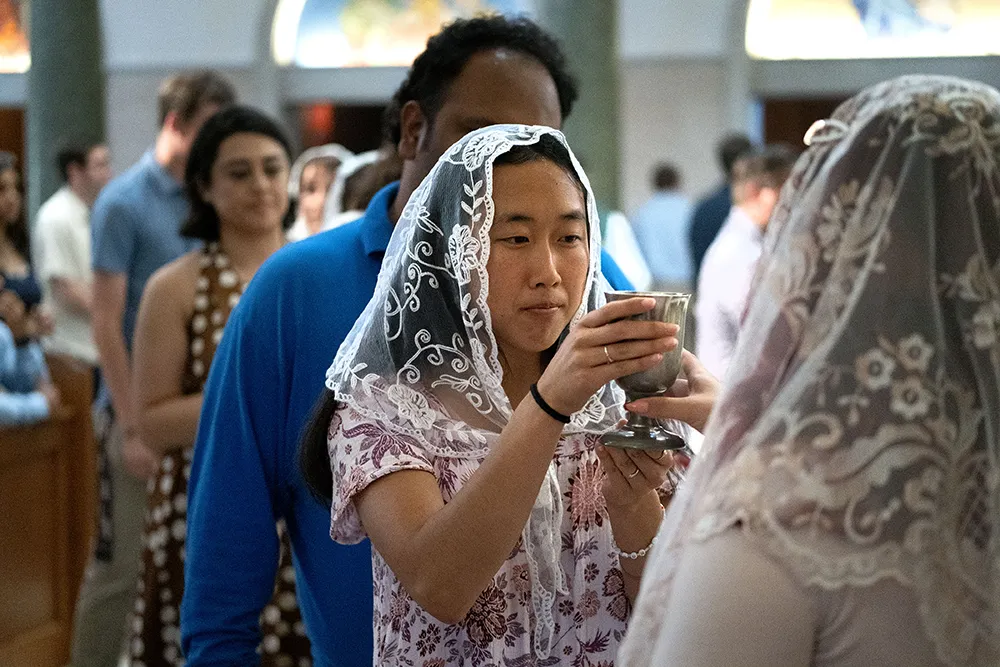
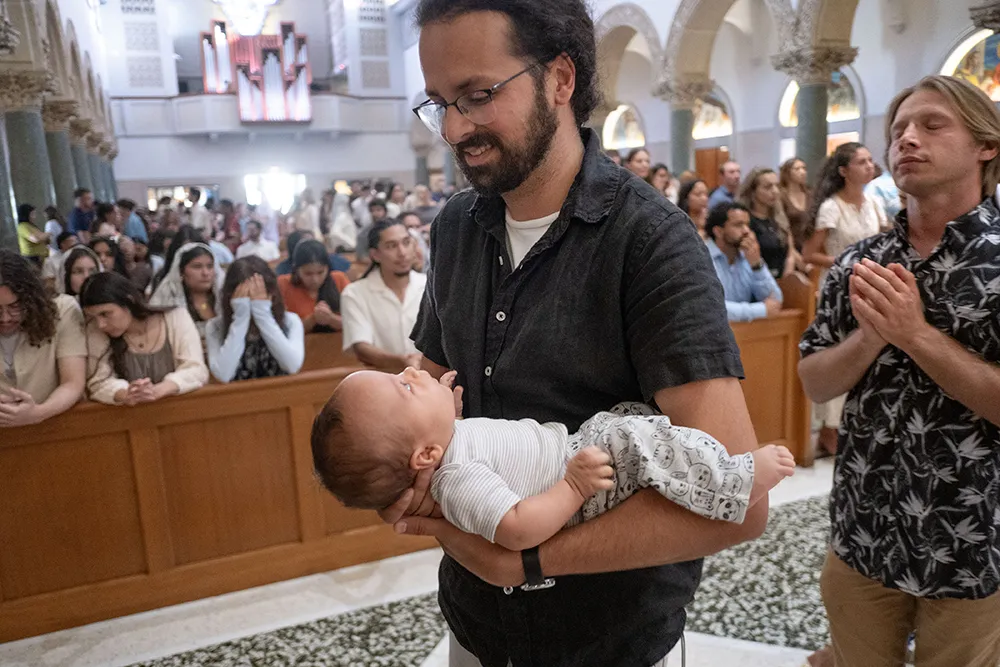
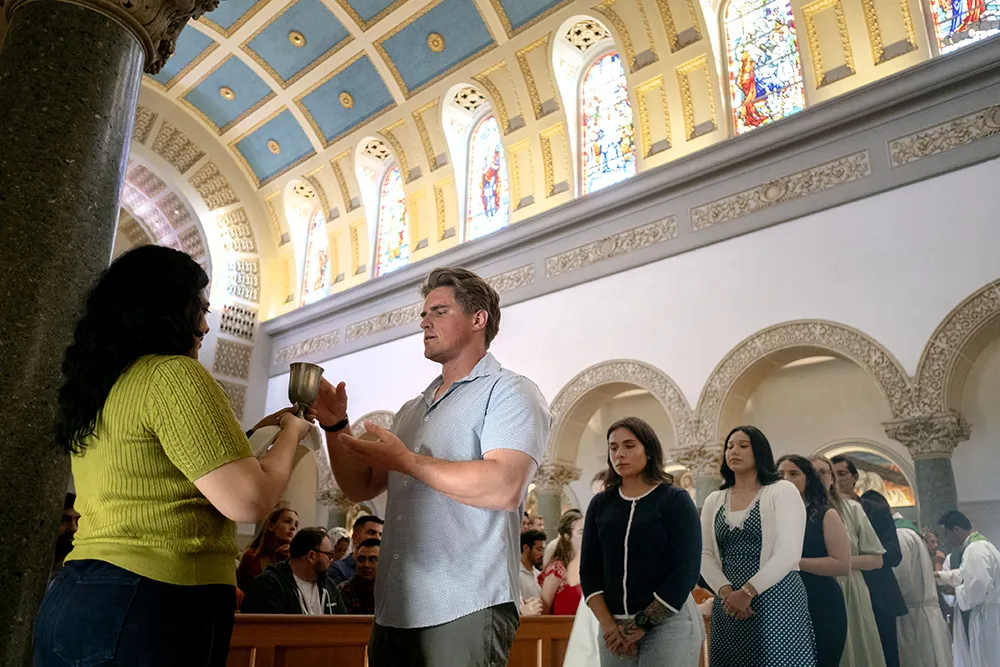
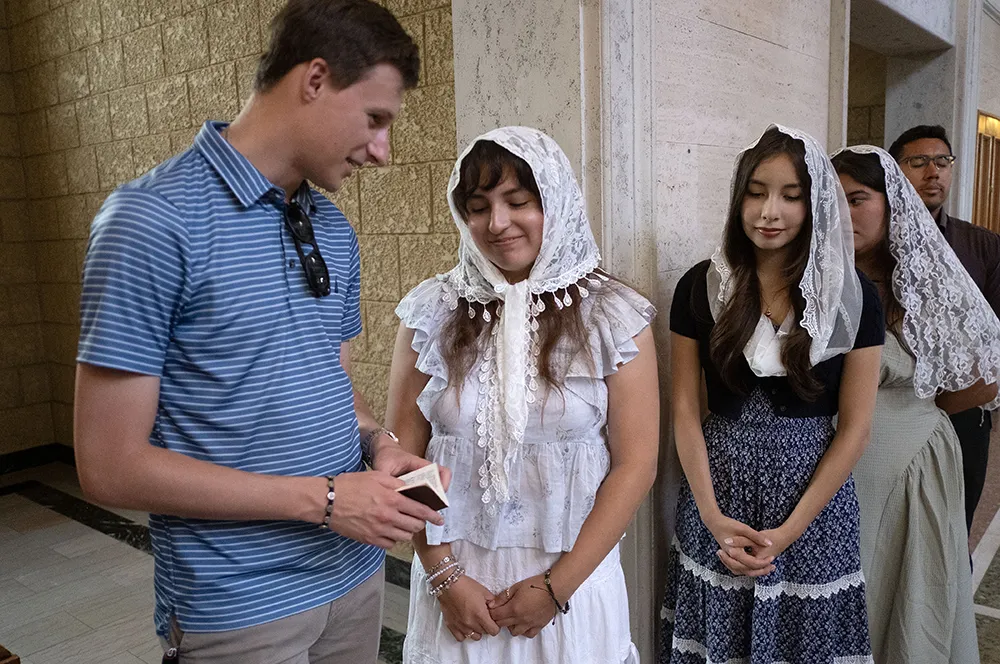
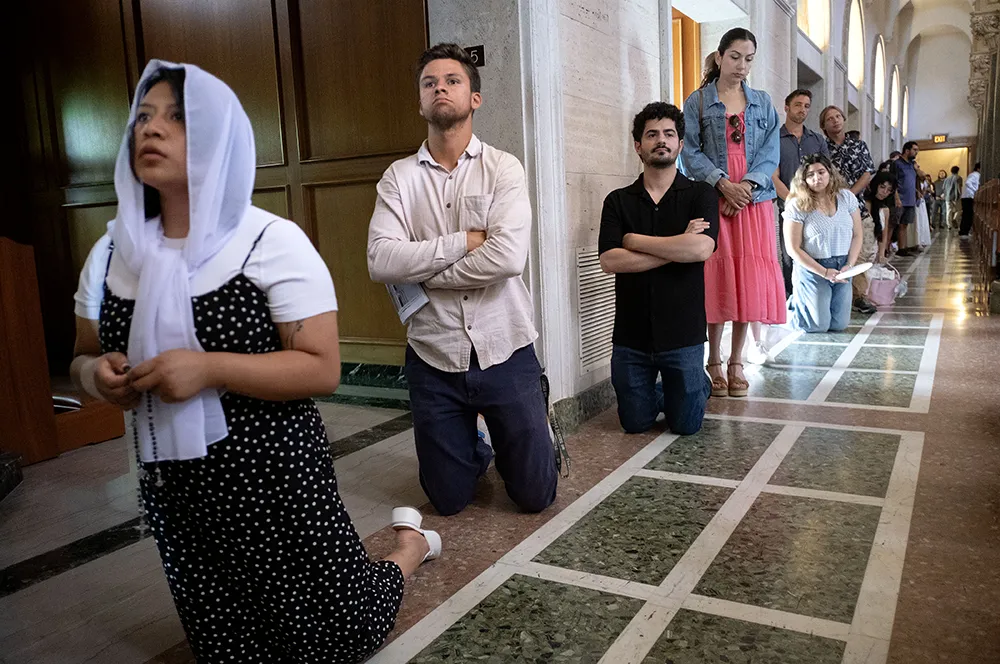
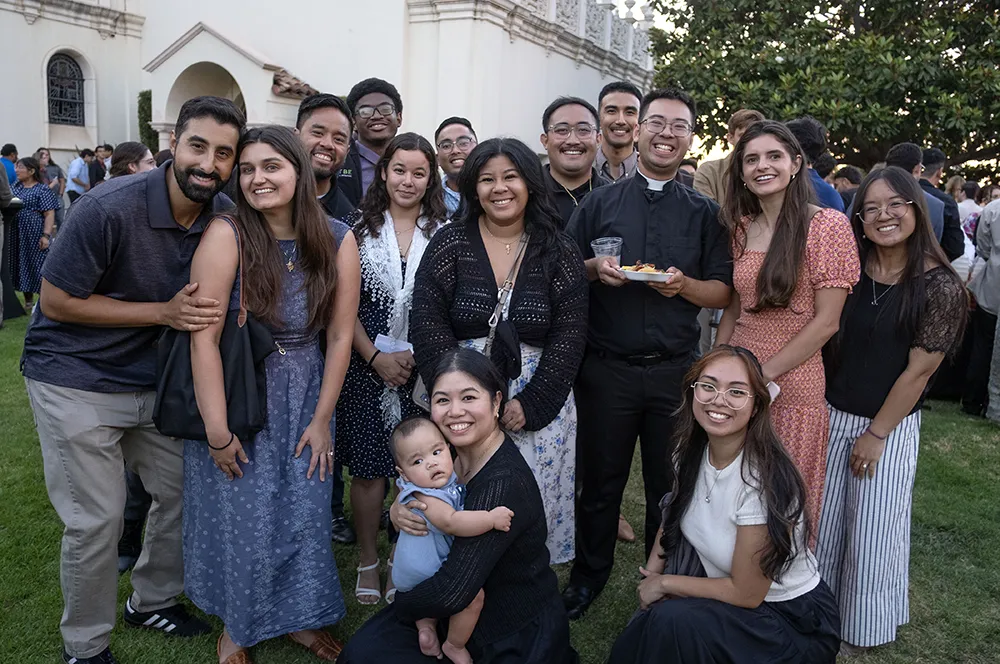
Auxiliary Bishop Felipe Pulido asked the women and men attending the diocese’s annual Young Adult Mass to ponder that question. An estimated 600 packed the pews and lined the walls for the Mass on July 12 at The Immaculata Church, one of the largest turnouts in recent memory.
The director of the diocesan Office for Youth and Young Adult Ministry, Maricruz Flores Strauss, noted that a greater number of young families participated than in previous years.
“We had so many babies and toddlers,” she said. “We had strollers in the church. It was a beautiful thing to see.”
Besides the Mass, the office coordinates workshops, retreats and more to meet the needs and interests of young adult faithful across the San Diego-Imperial Valley region. The office also helps to connect them to “flourishing ministries” at parishes eager to serve them.
In his homily, Bishop Pulido reflected on the parable in that Sunday’s Gospel reading (Matt 13:1-23).
“A sower goes out to sow. Some seed falls on the path. Some falls on rocky ground. Some falls among thorns. And some falls on rich soil.
“If the sower knows that the seed will only grow well in fertile soil, why does he scatter seed everywhere? The answer is beautiful. Because the sower is God.
“His generosity has no limits. He believes in every human heart. He never says, ‘This person is not worth trying.’ …
“The real question,” he continued, “is not about the seed. The real question is: What kind of soil is my heart?
“Jesus gives us several possibilities.
“Some seed falls on the path, and the birds eat it. Today, those birds can represent our constant distractions … Social media demands our attention. Messages, emails, notifications, videos — they can consume our minds. Our distractions can steal the Word of God before it has the chance to enter our hearts.
“Then Jesus speaks about the rocky ground. The seed grows quickly, but because it has no deep roots, it withers when the sun becomes hot.
“How often does that happen to us? We attend a retreat. We leave inspired. We decide to pray every day. But after a few weeks, the enthusiasm disappears. Without deep roots in prayer and perseverance, faith cannot survive the challenges of life.
“Then Jesus speaks about the thorns. The seed begins to grow, but the thorns choke it. Those thorns can represent the worries, anxieties and pressures of daily life.
“Many people sincerely want to follow Christ, but they become overwhelmed by work, family responsibilities, financial concerns, illnesses or endless activities.
“So, today, Jesus lovingly asks each one of us: What kind of soil is your heart? Is it distracted? Is it shallow? Is it overwhelmed? Or is it ready to receive His Word?”
He said that the beautiful part of this Gospel is that the soil can change.
“No farmer expects good fruit without first preparing the land. The same is true of our hearts.
“Sometimes, we need to loosen the soil. That means allowing God to touch those places we prefer to keep hidden … But healing begins when we allow God into those places.
“We also need to water the soil. What are we watering our hearts with? If we constantly fill ourselves with bad news, complaints, negativity, endless entertainment, or social media, it becomes difficult for God’s Word to flourish.
“Instead, we should nourish our hearts with Scripture, prayer, the Eucharist, silence, acts of charity and good friendships.
“Finally,” he continued, “every gardener knows that weeds must be removed. There are habits, resentments, fears, sins and attachments that choke God’s life within us. They need to be pulled out, so that grace may grow freely.
“May we allow him today to cultivate our hearts, so that his Word may take deep root and bear fruit — thirty, sixty and a hundredfold — for the glory of God and the good of the world.”