By Cindy Wooden
VATICAN CITY — Stories about “the first 100 days” are standard fare at the beginning of a U.S. president’s four-year term. But a pope is elected for life and without having promised voters anything or having presented a platform.
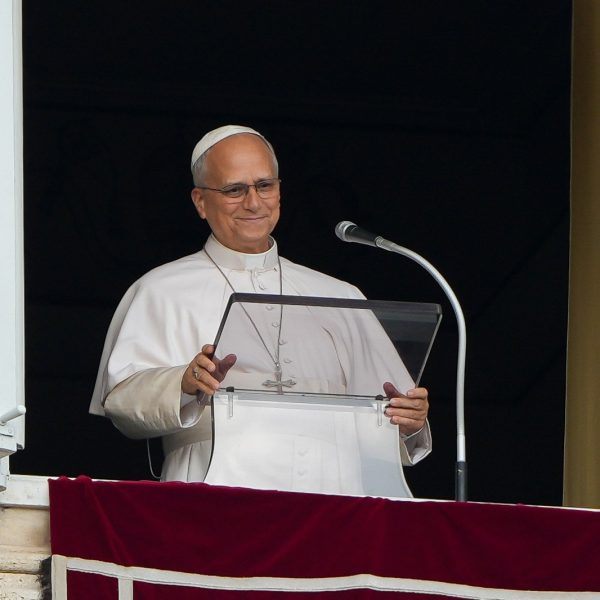
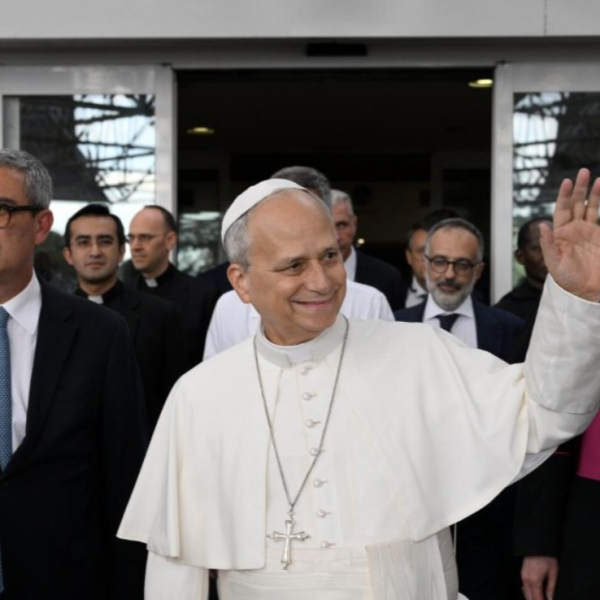
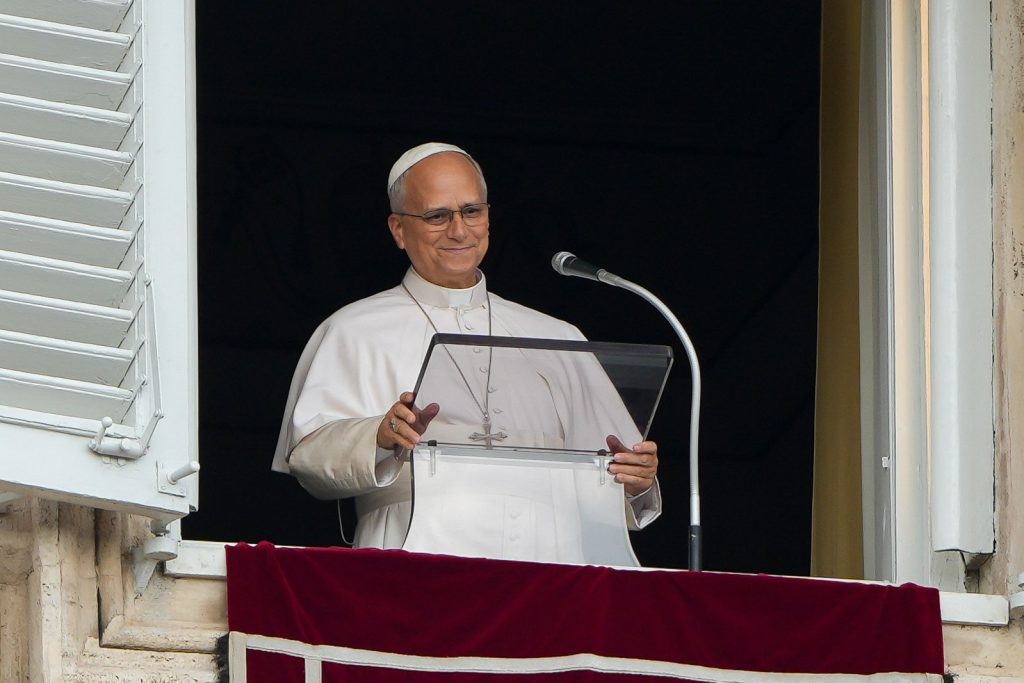
Pope Leo XIV was elected May 8, making Aug. 16 the 100th day since he stepped out onto the balcony of St. Peter’s Basilica as the new pope. He will celebrate his 70th birthday on Sept. 14.
While the first 100 days of a pontificate may hint at what is to come, the initial period of Pope Leo’s ministry as the successor of Peter and bishop of Rome seemed mostly about him getting used to the role, the crowds and the protocol.
According to canon law, the pope “possesses supreme, full, immediate and universal ordinary power in the Church, which he is always able to exercise freely.”
In other words, he could have issued a slew of the canonical equivalent of executive orders in his first days in office. Instead, he lived up to his reputation as a person who listens before deciding — holding a meeting with the College of Cardinals and individual meetings with the heads of Vatican offices.
Like his predecessors, Pope Leo confirmed the heads of Curia offices on a temporary basis a few days after his election. Some major nominations are expected in September or early October, starting with his own replacement as prefect of the Dicastery for Bishops.
In his first public address, moments after his election, the new pope said: “We want to be a synodal church, a church that moves forward, a church that always seeks peace, that always seeks charity, that always seeks to be close above all to those who are suffering.”
Pope Leo went deeper when he spoke about the key objectives of his ministry — in a pontificate that easily could last 20 years — during a meeting with the College of Cardinals two days after his election.
He asked the cardinals to join him in renewing a “complete commitment to the path that the universal Church has now followed for decades in the wake of the Second Vatican Council.”
That path had six fundamental points that, Pope Leo said, “”Pope Francis masterfully and concretely set it forth” in his first exhortation, “The Joy of the Gospel.”
The six points highlighted by Pope Leo were: “The return to the primacy of Christ in proclamation; the missionary conversion of the entire Christian community; growth in collegiality and synodality; attention to the ‘sensus fidei’ (the People of God’s sense of the faith), especially in its most authentic and inclusive forms, such as popular piety; loving care for the least and the rejected; (and) courageous and trusting dialogue with the contemporary world in its various components and realities.”
According to a Gallup Poll conducted in the United States July 7 to 21 and published Aug. 5, Pope Leo was the most favorably viewed of 14 world leaders and major newsmakers; 57% of Americans said they had a “favorable opinion” of him and 11% said they had an “unfavorable” opinion.
Among those surveyed, self-identified Catholics gave all three popes even higher ratings at the beginning of their pontificates, the polling group said, “with Leo viewed favorably by 76%, Francis by 80% and Benedict by 67%.”
As a Curia official, the future pope had a reputation of being reserved, but Pope Leo has shown he has a special tool for connecting with a crowd: speaking English and Spanish as well as Italian, the Vatican’s official working language.
His ability to switch among the three languages effortlessly was on full display at the Jubilee of Digital Missionaries and Catholic Influencers, July 28 to 29, and the related Jubilee of Youth, July 28 to Aug. 3. The young people roared with approval as he spoke to them in languages that most could understand.