EL CAJON — “The church is open to everyone.”
That is the simple premise behind the diocese’s approach to serving families who have loved ones with special needs.
One of them is the Durán family. On a recent Saturday at Holy Trinity Church, Javier Durán read the Prayers of the Faithful from the area just outside the sanctuary, where a music stand and microphone had been placed during a “sensory-friendly Mass.” He has muscular dystrophy and gets around in a wheelchair and uses a ventilator.
“I always wanted to be a lector, but I can’t go up the steps (to get to the altar),” he said. “Today, they gave me the opportunity to do it.”
Over the past two years, a growing number of catechists have reached out to the diocesan Office for Evangelization and Catechetical Ministry, seeking the tools to create those opportunities.
The office has responded by hosting workshops that provide practical tips for adapting faith-formation programs and Masses. That’s in addition to its ongoing Special Needs Certification Program, offered in English and Spanish, which offers lesson planning, activities and resources to create an environment that better serves children and youth with disabilities.
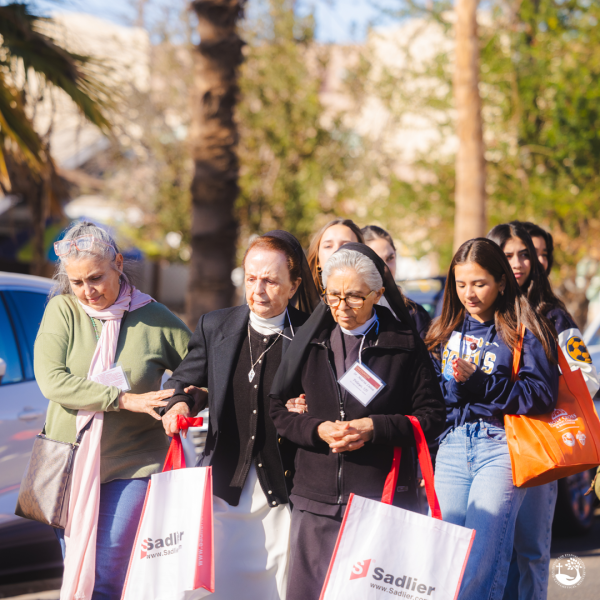
The first of these workshops, presented in English, was held last July at St. Mary Magdalene Parish in San Diego. The second, in Spanish, was held April 25 at Holy Trinity Parish in El Cajon. After each workshop, participants were invited to attend what was dubbed a “sensory-friendly Mass” because it included accommodations for worshippers with a variety of special needs.
Leticia Trent, the office’s director, said that about 40 people attended the workshop and Mass in July, while the more recent event drew about 60 to the workshop and about 100 to the Mass.
“The whole point was to be creative,” said Trent, who noted that catechists have the option to include students with special needs in class, adjusting lesson plans where necessary, or take them aside for one-on-one instruction.
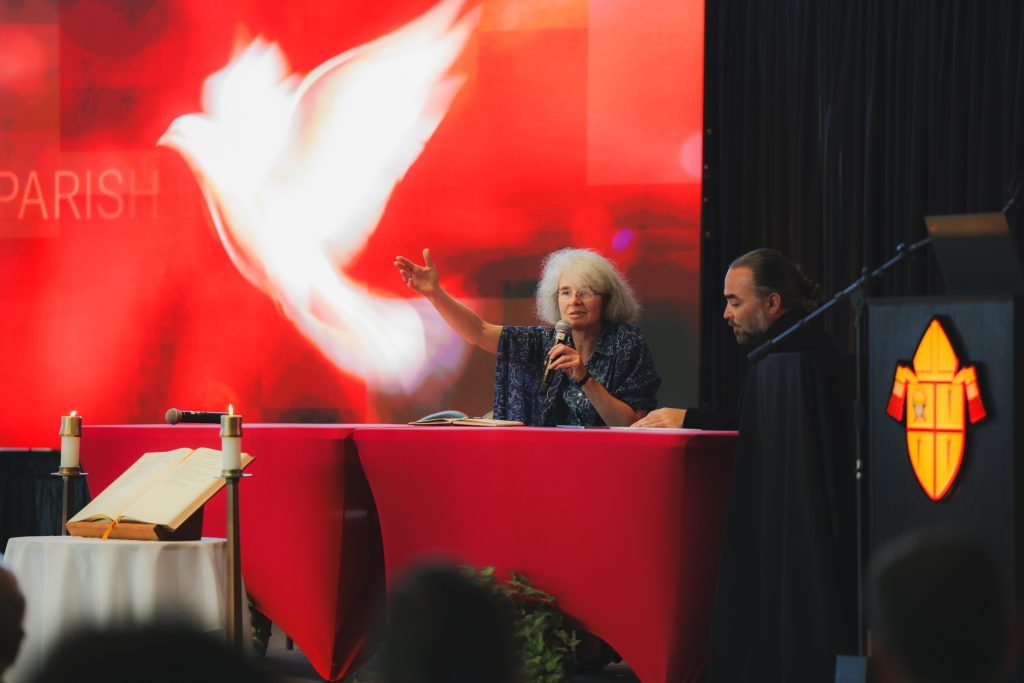
Ana Barraza, who leads the “Ministry for Catholics with disAbilities” in the Diocese of Sacramento, presented the April 25 workshop. She provided participants with general guidelines for sensory-friendly Masses, such as dimmer lights, no bells or incense, softer music, short homilies, a Quiet Room and the availability of low-gluten hosts.
Trent said that the goal for such a Mass is to be about 40 minutes. Optional elements that could be sources of distraction or discomfort for those with heightened sensitivities are removed.
Parents of children with special needs may feel rejected when other parishioners tell them that their children are noisy or distracting at Mass, Trent said. At a sensory-friendly Mass, it’s made clear that there’s no judgment if children make noise or even if they feel restless and need to walk around inside the church.
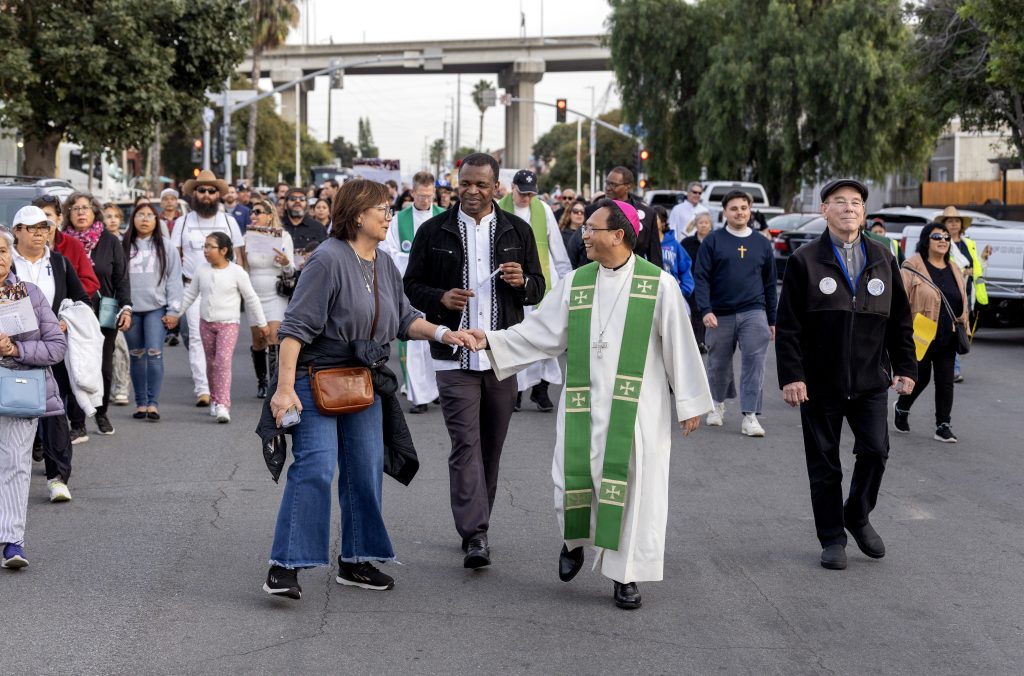
Trent noted that the Mass readings used at the most recent sensory-friendly Mass were taken from the “Lectionary for Masses with Children,” which meant that they were shorter. For the Responsorial Psalm, only the response was sung, while the verses were spoken. Father Reynaldo Manahan, pastor of Holy Trinity Parish, used a prop in his homily — a box of crayons, which symbolized diversity — to engage children with special needs.
However, Trent said, the “most impactful” element was having parishioners with special needs fulfill liturgical roles during the Mass.
Angel Jacobo, a 13-year-old member of Holy Trinity Parish who has autism, served as a lector for the first reading.
Angel’s mother, Irene Jacobo, said her family has attended the parish for four years.
“This Mass is important for my son,” she told The Southern Cross. “Given his limitations, this Mass is an opportunity for him to learn about it, then practice what he learns. It’s also a way for him to feel a part of this community.”
Trent recalled being approached after the Mass by the parent of another child with special needs, who told her that seeing Angel serve as a lector had given her hope that her 7-year-old son might do the same one day.
Javier Durán, who will turn 46 in June, and his parents have been members of Holy Trinity Parish since 2011. They attend Sunday Mass regularly.
He was diagnosed with muscular dystrophy at age 10 and has battled many health problems, including kidney disease, most recently.
In 2012, he received his First Communion. Shortly thereafter, he began helping Spanish-speaking families in the Order of Christian Initiation of Adults (OCIA) process. He teaches some of the sessions, sometimes joined by his mother, who described herself as Javier’s hands and voice when needed.
“I like to help people learn about Jesus and become his disciples,” he said.
Barraza, who has more than 30 years in ministry and has focused for the last 17 years on ministering to those with special needs, said that Catholic adaptive curricula have been “developed and growing at a steady pace” over the last decade.
“Efforts are more noticeable as we look to welcome families with disabilities in the here and now,” she said.
Barraza said that the most common barrier seems to be the mistaken belief that a child with disabilities “does not need or cannot receive the sacraments.”
“This closes the door to the family,” she said.
Barraza said that catechetical leaders often feel “overwhelmed” when they receive a family with special needs. But she expressed hope that they might come to understand that working with such families is both “possible and easier than it seems.”
“We become Church when we love one another” – both those with and without disabilities, she said.
Trent acknowledged that “there’s work to be done” to improve access for those with special needs. For example, she said that she would like to have American Sign Language (ASL) interpreters at future sensory-friendly Masses.
Though the offerings are currently sparse, Trent tells directors of catechetical ministry that “every single parish” should be a place where families with special needs can find adapted faith-formation programs and sensory-friendly liturgies.
Even if a parish doesn’t have any staff members who have credentials for working with these families, she said, “You still have a Body of Christ willing to welcome them.”
Of the catechists at her own parish, she said, “They are willing to walk with the families and with the kids, because they know that they can adapt their classes.”
Trent said that planning for the diocese’s second sensory-friendly Mass was easier than the first, because it was celebrated at her own parish, where she serves as coordinator of Spanish-language religious education and already knows parish families with special needs.
She said that the challenge of making adaptations for those with special needs is that a cookie-cutter, one-size-fits-all approach won’t work. For example, she said, not every parishioner with special needs is going to require dimmer lights for Mass or softer music.
“That’s the challenge. That’s why we are called to be pastoral,” she said.
Trent said that being intentional about sensory-friendly Masses means that parishes can’t simply declare that their regular 5 p.m. or 7 p.m. Mass is going to be one from now on. Many children with special needs are already finding their focus waning by late afternoon, she noted.
Similarly, she said, weekend Masses with high attendance aren’t going to be the best fit either for these families.
“It’s mainly walking with them, knowing the families,” Trent said.
She tells the catechists, “Open your doors and start building that relationship.”
What advice would Irene Jacobo give to other parents of children with special needs?
“First,” she said, “set aside your fears, because sometimes you can be afraid that they will behave poorly, that they will make noise, things like that.”
Additionally, she said, “I invite them to think that Jesus is here and that he sees their child, that he sees all the effort we’re making to transmit the Gospel.”
Durán’s parents, Julia and Javier, had their own insights to share.
“I tell people who want to come to Mass to look for a comfortable spot, beginning in the back of the church,” said Julia. “That’s how we began, in the back, looking for a space for (her son). In some spots, he was in the way, in others he was not comfortable because he wanted to be closer to the altar. Now, we try to get this spot (at the end of the front row). It feels like we’re at home there.”
The elder Javier Durán said, “This (sensory-friendly) Mass is an opportunity for more people to come to church, because a family with a member with a certain condition can’t go many places. Here, they are welcomed. The church is open to everyone.”
Aida Bustos contributed to this story.