By Sandra Dibble
TIJUANA — As darkness fell over the international border, Casa del Migrante was filled with light and the buzz of conversations on a recent Friday evening. It was a farewell for its longtime director, Father Patrick Murphy, CS, who was stepping away after more than 12 years, and a welcome for his successor, Father Lorenzo Chaidez.
In the crowd was a family of five from Mexico City. Mother, father and three children arrived in Tijuana late last year, hoping to apply for U.S. asylum, but they were stopped at the border and sent back. Afraid to go home, they turned to the Casa, first for shelter and then for help finding a place of their own.
“They gave us the opportunity to begin again,” said the wife, a woman in her 30s who asked that she not be named, fearful they could be tracked down and harmed. At the Casa, “they gave us the basic tools — a place to stay, food — and then they helped us find jobs and school for the children.”
Set on a hilltop overlooking Tijuana, the Casa has strived to be a place of hope since it opened 38 years ago. Under Father Murphy’s tenure, this has meant not only meeting migrants’ and deportees’ immediate needs for food, shelter and spiritual support, but also offering longer-term assistance for those growing numbers who stay in Tijuana.
Every day, more than 80 former residents return for a meal at the Casa. On Wednesday evenings, the priest offers Mass at the Casa’s open atrium, where residents charge their cellphones by a shrine to the Virgin of Guadalupe.
On weekday mornings, working parents drop off their children before school, knowing they will be safe at the Casa, where someone will take them to school and pick them up. On Saturdays, groups of Haitians learning Spanish gather at CESFOM, the Scalabrini school for migrants next door to the shelter, that offers classes in everything from welding to party decoration to computer literacy.
Under “Padre Pat,” as Father Murphy is known in Tijuana, “the Casa has opened its arms to the city,” said Gilberto Martínez, the Casa’s longtime administrator. “Padre Pat has left his mark by helping migrants establish themselves in Tijuana.”
Tijuana’s oldest shelter, the Casa opened in 1987 to serve migrants heading north to work in the United States, and has since received more than 270,000 people from around the world, mainly Mexico and Central America. The 140-bed facility is operated by Scalabrinians, a Catholic community founded in 1887 in Italy by St. John Baptist Scalabrini to serve migrants and refugees.
Under its current policy, the Casa’s residents are limited to a 45-day stay as they find their footing and plan their next step. These days, they are typically deportees, many of them English-speakers, “just everyday people who are picked up at their homes or at factories, going to work, at traffic stops, run-of-the-mill people who are trying to make a life for themselves and their family and got deported,” Father Murphy said.
He said it is their stories that stick with him now that he has stepped away.
“The people I met who had houses, had cars, had families and they’ve been uprooted violently from their lives and they have to start all over again,” he said.
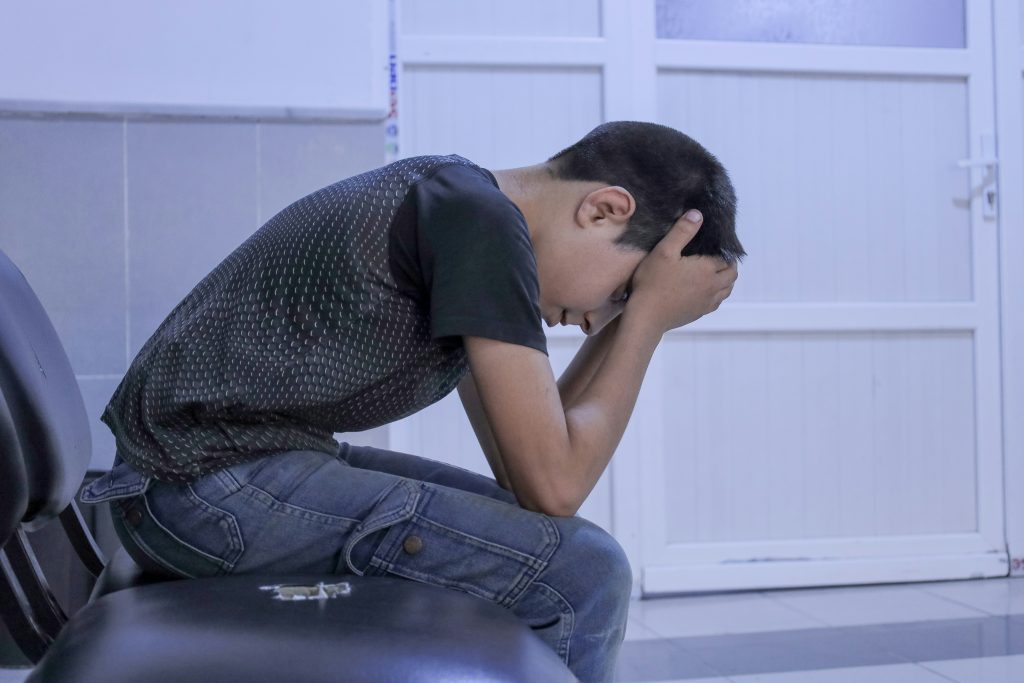
When they arrive at the Casa, “they are really in shock,” he continued. “They thought they would never be deported, even though the signs were there … They thought they could somehow escape it and they didn’t.”
Born and raised in New York City, the grandson of Irish immigrants, Father Murphy grew up on Staten Island near a Scalabrini seminary that first drew his curiosity to its mission. This year, he is celebrating his 45th anniversary as a priest.
Father Murphy arrived in Tijuana in 2013 by way of Kansas City, where he had been working with its growing Hispanic community. Back then, the Casa was an all-male shelter filled with deportees. But that changed in 2016, with the arrival of large numbers of Haitians hoping to cross to the United States. They were followed by caravans of Central Americans, and groups of Mexicans fleeing violence in the country’s interior. Soon, Cubans, Chinese, Russians and Cameroonians began arriving petitioning for asylum.
Today, that flow has stopped under President Trump’s hardline immigration crackdown. Since the cancellation of the border asylum appointment system known as CBP One, many migrants who were in Tijuana waiting their turn have left.
The large numbers of deportees anticipated initially under Trump has yet to materialize. But those who do arrive are often in profound crisis.
They come just with their shirts on their back, and they’re showing up with a lot of emotional and also physical needs,” Father Murphy said. Many suffer from anxiety, depression, diabetes, high blood pressure, he said. “A lot of people who are being deported are in their late 50s, early 60s. And that’s a tough time to uproot yourself and start a new life.”
Few deportees harbor hopes of crossing back to the United States, Father Murphy said. “People now realize it’s practically impossible.”
About 50 percent of the Casa’s residents end up staying at the border.
These days, only about half the Casa’s beds are occupied on any given night. But those who choose to stay in the city know they can count on continued support as they move out and rebuild their lives.
“It’s a great opportunity for us to get up on our feet, before losing pretty much everything on the other side of the border,” said a deportee who gave his first name, Miguel, back in Mexico after 36 years in Southern California. At 52, he quickly found work as a roofer through the Casa, and said he had no intention of crossing, knowing he’d risk extended incarceration if caught.
Far from the heated rhetoric over illegal immigration, the Casa shows a far more human reality. Father Murphy recalls overhearing the Casa residents calling home.
“I’m not eavesdropping, but they talk very loud, ‘How’s it going? Are you studying hard?’ You know, the interest of a father for his daughter, just really common human things. I wish Trump could just hear that conversation; they’re speaking in perfect English, so he’d be able to understand.”
Since mid-September, the Casa’s new director, Father Lorenzo Chaidez, also a Scalabrinian, has taken over as the shelter faces unprecedented funding challenges. The Trump administration’s slashes in foreign aid cost the shelter 40 percent of its funding earlier this year, forcing painful staff cutbacks. Finding new sources of funding is critical, and Father Murphy plans to maintain his ties to the Casa in the coming years by supporting its fundraising efforts.
Father Murphy has left the Casa, but he has not gone far, and plans to continue his life’s mission of supporting migrants.
He now lives five miles away, based at Our Lady of Mt. Carmel Church in San Ysidro, which in July became part of the Scalabrinian mission. Murphy expects to continue his ministry and missionary work there, while supporting the Casa.
He is also a visiting priest at Holy Trinity Church in El Cajon, celebrating Masses there as he has done since 2013.
As he moves forward, Father Murphy carries with him the lessons learned from so many migrants who came through the Casa.
“They taught me to not lose hope, they’ve taught me to always be positive. They taught me to continue to laugh, even in the moments of sadness. They taught me not to accept ‘no,’ if the door is closed, because there’s always another door to be opened.”