SAN DIEGO — The Discalced Carmelites are celebrating a century of “hidden life” and “prayerful presence” in San Diego.
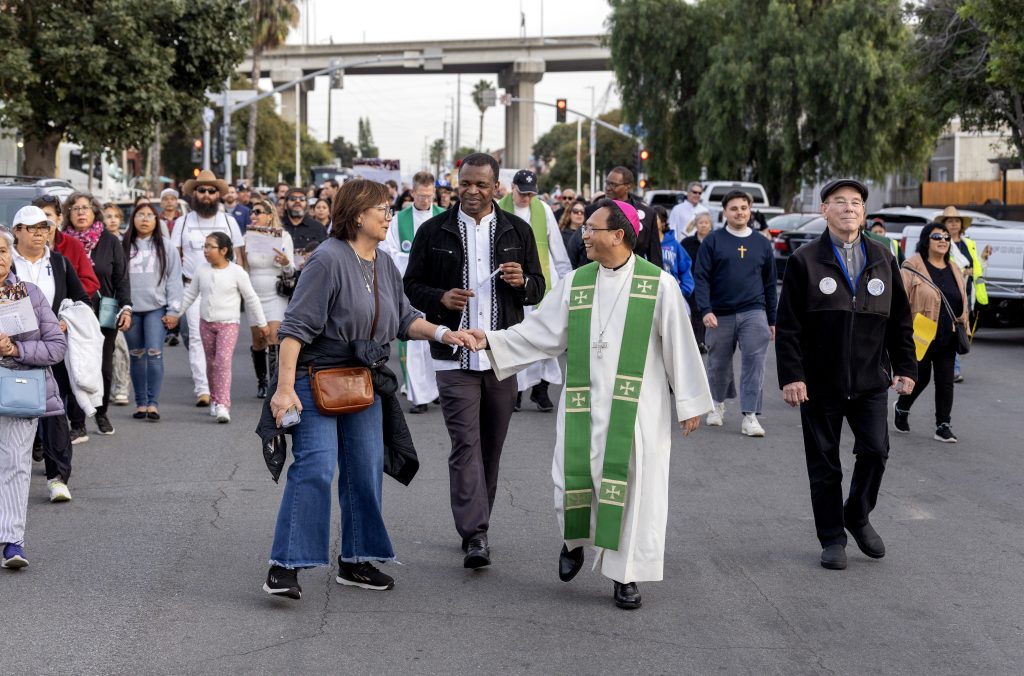
Bishop Michael Pham joined the cloistered sisters on June 20 to mark the milestone anniversary. He celebrated Mass in the chapel of their monastery, Carmel of the Trinity, which is located on Hawley Boulevard in the Normal Heights neighborhood.
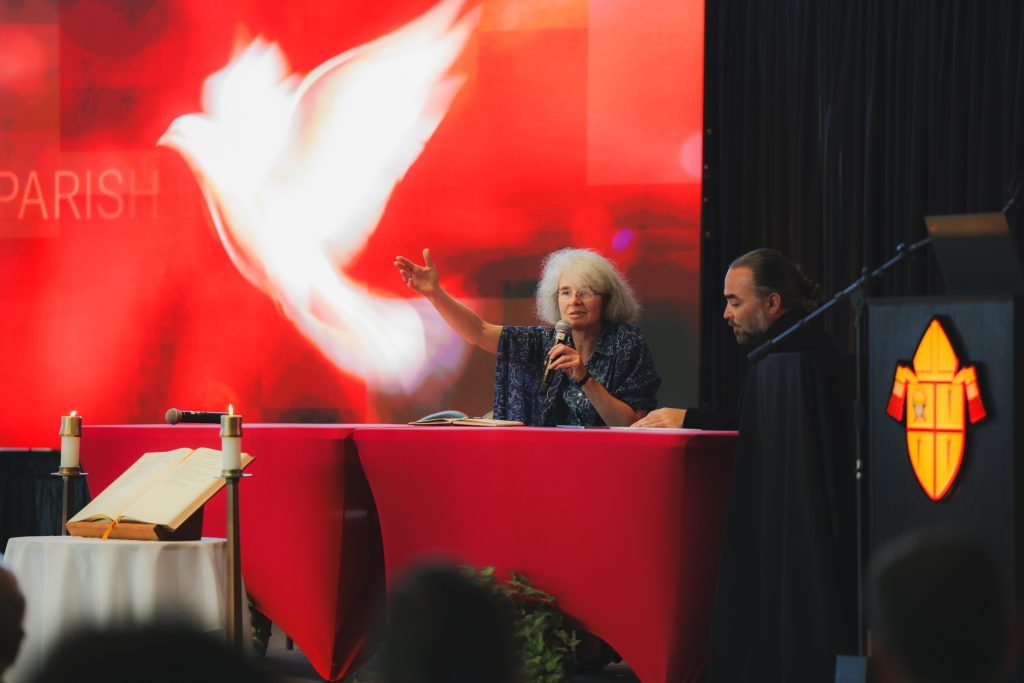
Sister Maria Fideles Musiko, who has served as prioress for almost a year, reflected on the significance of the centennial.
“The 100 years’ celebration brings us peace and love as we thank God for his blessings in our lives as a contemplative monastery here in San Diego,” she told The Southern Cross.
She said, “We look back with gratitude and appreciation in all that we have been and achieved … Our prayerful presence is a beacon of hope to the diocese, both Christians and non-Christians.”
Sister Musiko explained that the Carmelite charism is “union with God through contemplative prayer.”
“Prayer is the core of our life,” she said. “We bring the whole world before Christ.”
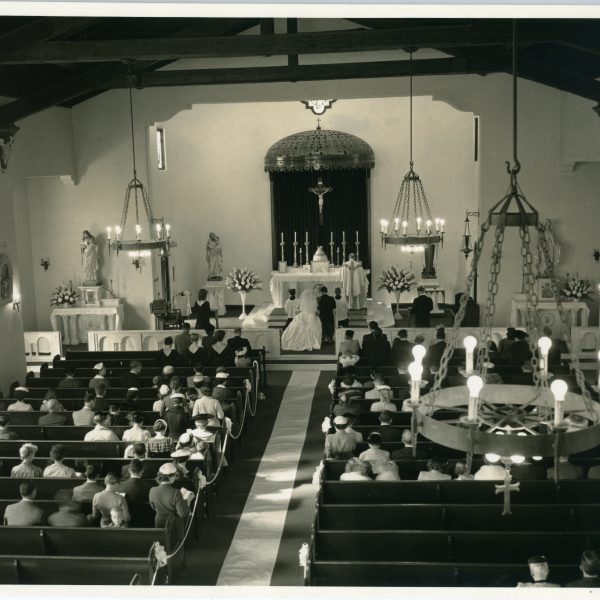
The Discalced Carmelites’ local history dates to when Bishop John J. Cantwell, then bishop of the Diocese of Los Angeles-San Diego, invited Carmel of Santa Clara to send sisters to establish a new community in his diocese.
Five nuns arrived on June 11, 1926, and two houses in the North Park neighborhood were transformed into a temporary monastery for them.
The current monastery was built in 1932 and is now home to 14 sisters, who range in age from early 30s to mid-90s; the latter has been there for 74 years. Sister Musiko said that the community also has two women who are currently in formation.
The San Diego Community of Discalced Carmelite Seculars was established 71 years ago in the monastery’s chapel. It’s composed of lay men and women — both single and married — who are affiliated with the Carmelite Order and have undergone more than seven years of formation; made formal promises of chastity, poverty and obedience; and gather regularly as a community. Currently, there are more than 50 active members and another 55 who are homebound; about 30 took part in the June 20 celebration.
Sister Léonie Williams, 31, told The Southern Cross what the sisters’ daily schedule is like.
They gather together at 6:45 a.m. on Mondays through Saturdays to recite the Divine Office and attend Mass. (On Sundays, they sleep in until 9 a.m.)
Between then and 5 p.m., when the community gathers once again for Vespers, the sisters individually complete their daily tasks, one hour each of spiritual reading and silent mental prayer, and the little hours of the Divine Office.
Sister Williams said the sisters’ jobs include serving as sacristan; as provisor, who is responsible for ordering groceries, primarily online; working in the altar bread room and in the vestry (which includes the house pharmacy and other household supplies); various cleaning assignments; and maintaining the monastery garden.
On Wednesdays through Sundays, the days when the sisters share a meal in common, Sister Williams said, the nuns take turns cooking for the whole community.
After Vespers comes another hour of silent mental prayer, followed by supper together in the refectory. This is followed by an hour of recreation, which usually consists of the sisters sharing about their day, but can also include card games and ping pong.
The day ends with Compline at 8 p.m., followed by “grand silence,” a special period of silence and solitude during which all non-emergency tasks are avoided.
“As a fully contemplative community,” said Sister Williams, “we have limited direct contact with the outside world. … Besides doctor’s appointments and the occasional grocery run, the nuns are not generally permitted to leave the cloister.”
She said that the public is welcome to attend Mass in the monastery chapel, which is celebrated at 7:30 a.m. on Monday through Saturday and at 4 p.m. on Sunday, and friends and family are allowed to visit an individual nun monthly in one of the monastery’s “speak rooms.”
The monastery has an email address and phone number, through which it receives prayer requests, which are posted daily on the community board, so that all the sisters can see them. They also have a newspaper room, where they can keep up on current events, and a library computer that all of the sisters can use.
“After the first few years of formation, a nun is permitted to have a phone, especially if her office requires her to use one,” said Sister Williams. “In all cases, the nuns are encouraged to use technology only in ways that do not interfere with her vocation of prayer and total commitment to God.”
Sister Musiko, 62, entered religious life at the Nairobi Carmel in 1984, professing her first and final vows in 1987 and 1990, respectively. She came to Carmel of the Trinity in 2017.
“Saying ‘yes’ to God’s call has been the greatest joy of my life,” she said, “and I know, if I were to start all over again, I will still choose to be a Carmelite.”
“That doesn’t mean that it has been a straight line scattered with roses only,” she said. “There’s been ups and downs, sorrow and pain, and loss of loved ones. This keeps me grounded with all humanity in their sorrows and pain, carrying the cross daily focused on Christ our savior. And, as St. Therese said, we come to realize that everything is grace.”
Sister Michaela Gresko, 77, is a former prioress of Carmel of the Trinity. She entered religious life in 1971, professed first vows in 1974 and made her final profession in 1976.
“It’s a hidden life, simple and without obvious significance,” she said. “It says a great deal to me that our monastery has stood on top of a hill overlooking Mission Valley for 100 years and yet most people don’t know we’re here, don’t know who we are or what we are. That has never bothered me, nor has it kept our community from doing what God put us here to do.”
Sister Gresko described it as “a life stripped to its essentials and focused on ‘the one thing necessary.’” She said that her vocation has given her the opportunity “to live a life with depth and with substance.”
Sister Musiko expressed her community’s gratitude to Bishop Pham, Auxiliary Bishop Felipe Pulido, local clergy, men and women religious, lay Catholics, and all who have “helped the monastery arrive at this celebration of 100 years.”
“We appreciate the spiritual and material help given,” she said. “We appreciate, too, the moral encouragement and challenge.”
Sister Gresko said that, through her years of living there, she has had “one prayer, one desire for this monastery.”
“It’s that, God willing, the sanctuary light burning day and night in our chapel and in our choir never go out,” she said, “but that it always be a silent and unassuming radiance, softly shining in the night of our earthly life for those who need it in their lives, especially those living in darkness and unawareness of God, in order that they find their way to him; that, regardless of the winds and storms of time and life, it keeps burning with a strong and steady flame of living love.”