SAN DIEGO — The namesake of St. Didacus Parish isn’t exactly a household name.
“‘St. Didacus’ is not very familiar to many people,” said Father Andrew Kunambi, the pastor, who admits that he had never heard of the saint before his first visit to San Diego in 2016.
Yet, it shouldn’t be so unfamiliar — at least not for locals.
“If you know San Diego, then you have already known St. Didacus,” Father Kunambi said.
“Didacus” is simply the Latin form of the name “Diego.” The parish’s patron saint, a 15th-century Spanish Franciscan brother, is the same San Diego for whom the city, county and diocese are named.
Located in the Normal Heights neighborhood, just off of bustling Adams Avenue, St. Didacus Parish is marking its centennial this year.
A series of events to celebrate the milestone anniversary began over the summer with three movie nights, a parish picnic and a spaghetti dinner. Other events are still to be announced.
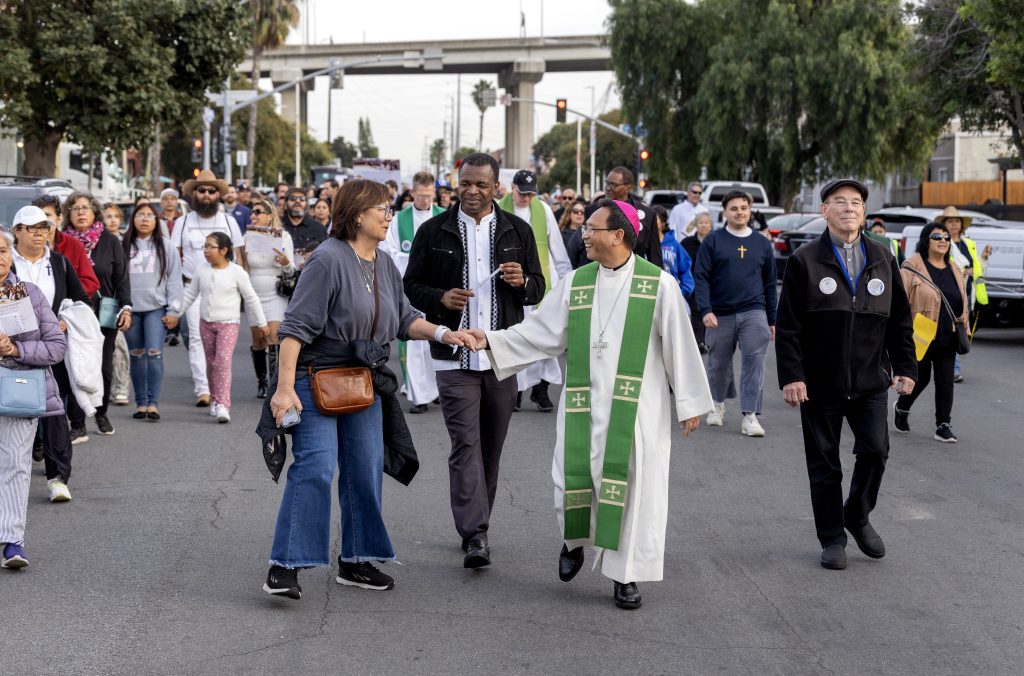
On Saturday, Nov. 7, the feast day of St. Didacus, Bishop Michael Pham will celebrate a 10:30 a.m. Mass at the parish, which is currently home to 622 active registered families. Exactly one year later, on Nov. 7, 2027, the parish will conclude its centennial celebration with a Mass celebrated by Auxiliary Bishop Felipe Pulido.
The centennial celebration “reflects the fruits of (the) evangelizing work of the pioneer missionaries and their successors,” said Father Kunambi. It is “a time to thank God for the gift of faith and renew ourselves, to keep and live our faith in the current world as witnesses and good stewards of the Lord.”
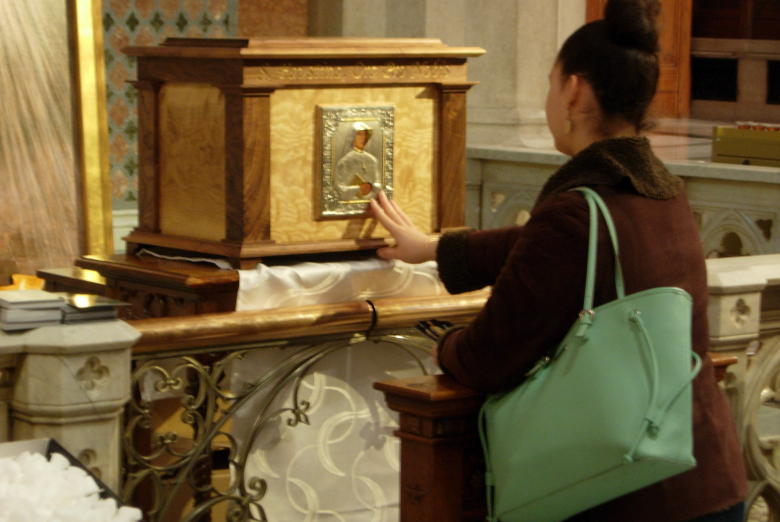
Fortuitously, the centennial anniversary coincides with the Extraordinary Jubilee Year of St. Francis, which is being observed throughout the Universal Church from Jan. 10, 2026, until the same date next year. Bishop Pham has designated St. Didacus Church as one of eight local pilgrimage sites, where the faithful can obtain a plenary indulgence during the jubilee year.
St. Didacus Parish was established in 1926, under its founding pastor, Father Thomas V. Murphy, at a time when the region was still part of the much larger Diocese of Los Angeles-San Diego.
Construction of the parish church and rectory was completed the following year, with the dedication ceremony held in October.
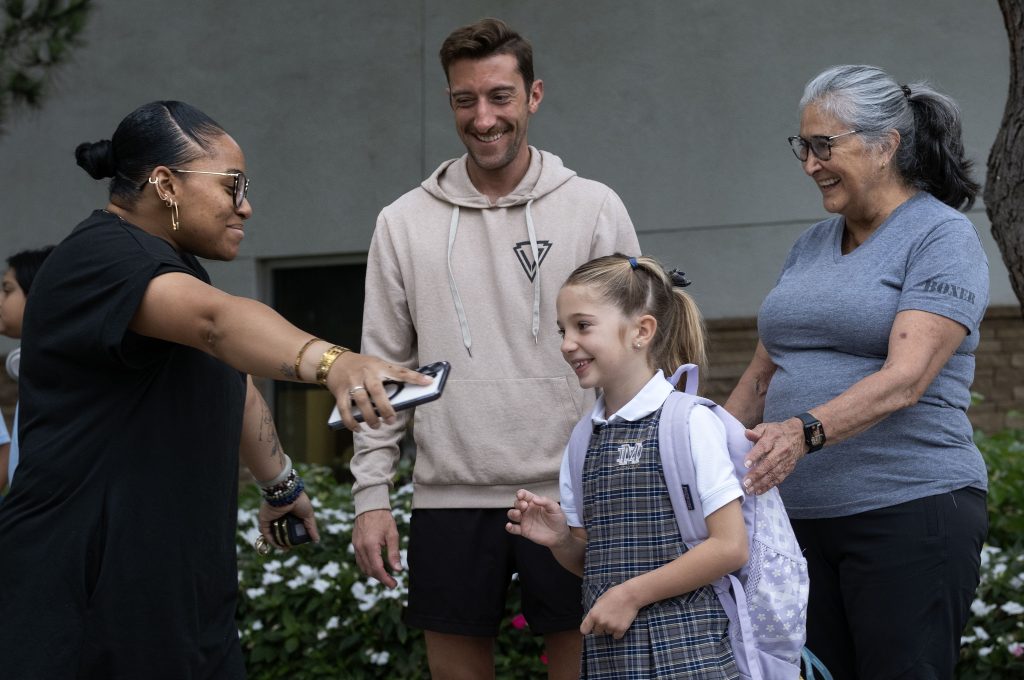
St. Didacus School, which is located within walking distance of the church on the opposite side of Adams Avenue, opened with about 160 students in September of 1939. The first graduating class received their diplomas on June 13, 1941. The school currently has 193 enrolled students.
Though the church has retained a traditional look, epitomized by its cruciform design and marble altar rails, the intervening years have seen some changes to the church and its environs.
A belltower, for example, was added to the church in 1977. The parish hall was dedicated on Dec. 19, 1986. A prayer garden, located between the hall and the rectory, was dedicated in 2008 and enhanced 10 years later with the construction of a Divine Mercy shrine.
A bilingual community, St. Didacus Parish offered its first Spanish-language Mass on Sept. 16, 2003. Today, the 11:30 a.m. Mass every Sunday is celebrated in Spanish.
John Earl, 90, was introduced to St. Didacus Parish in 1942, when his parents enrolled him at the parish school.
The Earls were members of St. Patrick Parish in North Park. But, at the time, that parish didn’t have a school of its own.
He attended St. Didacus School from first through fourth grade, before transferring to St. Patrick School. He made his First Communion at St. Didacus Church in May of 1944.
History repeated itself when Earl and his wife, Jean, were raising their own school-age children. The couple lived within the boundaries of St. John the Evangelist Parish in Hillcrest, but that parish’s school had closed. So, they turned to St. Didacus.
They were parishioners of St. Didacus Parish from 1975 to 1988, while their children attended the school. They returned to St. John the Evangelist for about 30 years, before feeling drawn back to St. Didacus shortly before the COVID-19 pandemic.
“We liked it so much here at St. Didacus,” said John Earl, “that we came back and we’ve been here since.”
Jean Earl, 80, recalled attending Mass at St. Didacus Parish on Thanksgiving Day about 10 years ago, before they had become parishioners again.
They had taken a pew near the front and watched as members of the Altar Society greeted and hugged one another. They soon discovered that such friendliness wasn’t limited to those who knew one another well, but was also extended to newcomers.
“We were strangers, more or less,” she said, explaining that it had been many years since she and her husband had been members of the parish, “and we were getting warm smiles, and waves, and nods, and acknowledgments, and I thought, ‘This is a friendly place still.’”
Michele Trevino, 81, has been a St. Didacus parishioner since 1973.
One of her children and two grandchildren graduated from St. Didacus School, where she served as a substitute teacher for about 20 years.
Trevino was asked to reflect on what it means that St. Didacus Parish has existed for 100 years as a faith community.
“What does it say to me? That everybody liked it, and it was friendly,” she said. “In essence, why would we not go somewhere else (if this weren’t the case)? You know, you get a choice.”
It’s the sense of hospitality, she said, that has kept her at the parish all these years.
Trevino said, “St. Didacus was what I thought a church should be. … Right away, it makes you feel at home.”
Patricia SanJuan, 50, joined the parish more than 24 years ago.
She recalled seeking out the nearest Catholic church after moving to Normal Heights with her husband and their children.
While exploring the neighborhood one Saturday evening, they “stumbled upon” the parish and took a peek inside as parishioners were leaving, she said. She recalled being “greeted … with a warm welcome” by the deacon.
“St. Didacus Parish community is special,” said SanJuan, “because they make you their family, and they give you their hearts full of love.”
The family have been regulars at the Spanish-language Mass ever since the parish introduced it.
SanJuan shared that all four of her children attended St. Didacus School, with the two oldest having graduated from there, and she hopes that all of them might someday be married in the parish church.
“St. Didacus is my home,” she said. “Even when I go to other parishes, I feel like I’m missing a part of myself because this parish community is my family. The love that I have received from other parishioners feels like God’s love through them. … I have truly learned to love God at St. Didacus.”